A Bali Wedding Day Timeline: How Destination Celebrations Typically Unfold
Updated October 2026
The short answer: Most Bali wedding ceremonies start between 4:00 and 4:30 pm. That avoids the midday heat and leads into drinks, family photos and sunset portraits, with dinner starting around 6:30 pm and the party running until the venue’s curfew, usually between 11 pm and midnight.
A wedding day in Bali tends to move differently than one back home. There’s still plenty of planning happening behind the scenes, but the day itself feels more relaxed, shaped by the light, the heat, and the general pace of the island.
Outdoor settings, tropical temperatures, and guests moving between different parts of the island all affect how the day gets structured. Instead of a tight, rigid schedule, Bali wedding timelines are built to support how the day actually feels to be in. Knowing roughly how that flow works helps you plan with realistic expectations from the start.
Why the Timeline Feels Different Here
Bali timelines get built around light, comfort, and atmosphere more than strict hour-by-hour scheduling.
Ceremonies usually happen later in the afternoon to avoid the worst of the midday heat, and receptions naturally pick up energy as the sun goes down and things cool off. What you end up with is a day that feels organised without feeling rushed, structured enough to run smoothly, loose enough to breathe.
Building that flow is a core part of what a planner does, and it’s one of the stages covered in our Bali wedding planning services.
Morning Preparations
Mornings tend to start earlier than most couples expect, even though the pace rarely feels frantic.
Hair and makeup usually arrive late morning, giving plenty of time before the ceremony later that day. These early hours tend to be calm, with photographers and videographers stepping in once preparations are underway. Since most weddings happen at private villas or estates, the prep space itself is usually relaxed, a good spot to actually enjoy time with close friends and family before things get going.
Ceremony Timing and Light
Ceremony timing is really about the light as much as anything else.
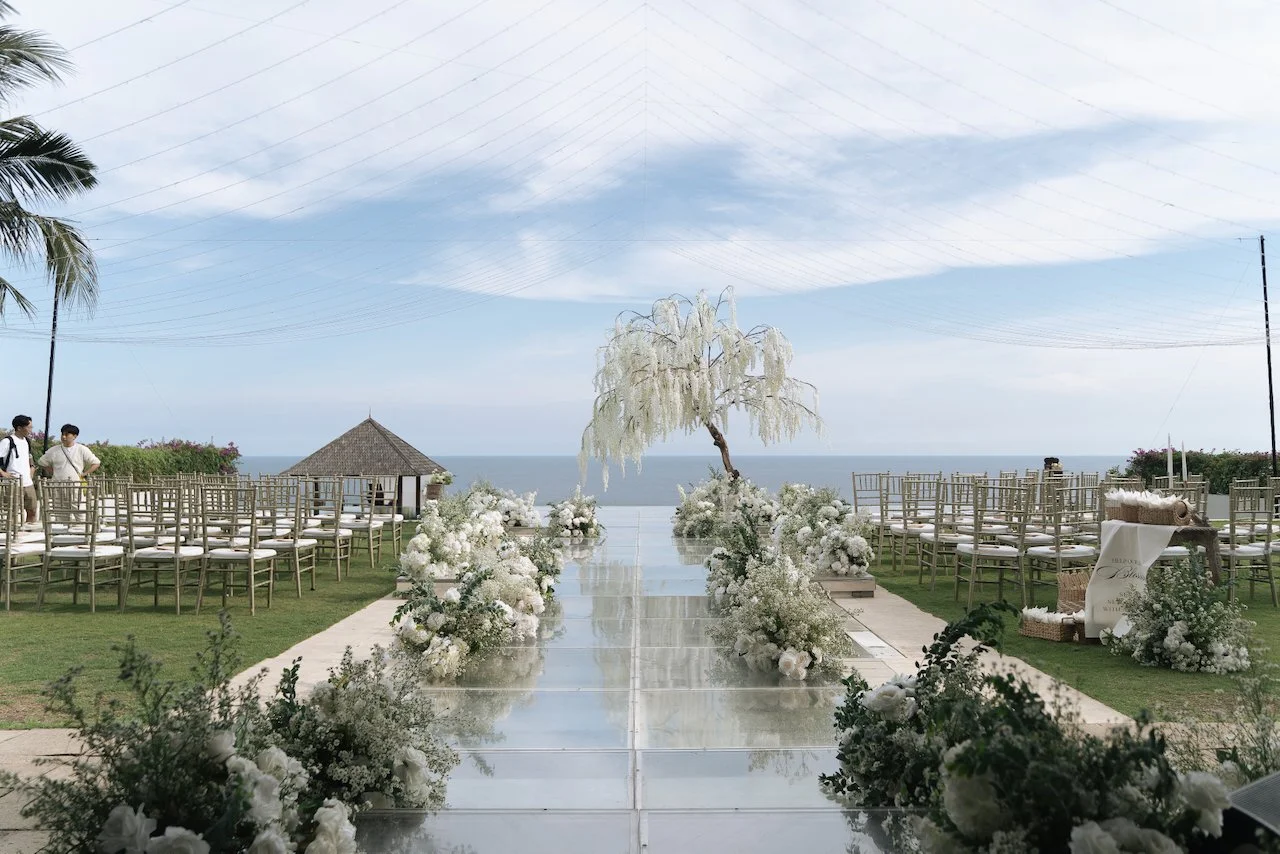
Late afternoon is the most common choice. The heat’s eased off, guests are comfortable, and the light turns warm and flattering, exactly what you want for photos. Rather than a hard start time to the minute, ceremonies tend to begin once guests are settled and the whole thing just feels ready to start.
Season affects this more than you’d think. Sunset shifts by about 40 minutes across the year, from roughly 6:05 pm in late May to 6:45 pm in late January, which is one of several reasons the time of year you choose shapes the whole day.
A Sample Timeline
Every wedding looks a little different, but here’s roughly how a typical destination celebration unfolds at a private villa during peak season.
Early Afternoon
2:00 PM — Photography and videography begin capturing final prep
3:00 PM — Sound checks and last styling touches at the ceremony space
3:30 PM — Guests start arriving, welcome drinks in hand
Late Afternoon
4:00 PM — Ceremony begins, timed to avoid the worst heat and catch great light
4:30 PM — Ceremony wraps, aisle exit, confetti
Golden Hour and Sunset
5:00 PM — Drinks and canapés, family photos
5:30 PM — Couple and bridal party step away for sunset portraits while guests enjoy cocktail hour
Evening
6:20 PM — Guests take their seats for dinner
6:30 PM — Grand entrance, dinner service starts
7:30 PM — Speeches, usually during or just after the main course
8:00 PM — Cake cutting, first dance
Night
8:30 PM — Dance floor opens
10:45 to 11:45 PM — Last bar orders, depending on venue curfew
11:00 PM to 12:00 AM — Music wraps, in line with local regulations
Guest Arrival and Movement
Guests moving around the island plays a bigger role in the timeline than most couples expect. Since guests often stay in different parts of Bali, arrivals tend to trickle in rather than show up all at once. A relaxed arrival window with welcome drinks gives everyone time to settle before the ceremony starts, while wedding day coordination happens quietly behind the scenes to make sure everyone’s seated and ready on time.
From Ceremony to Celebration
Once the ceremony wraps, the whole mood shifts into something more social. Family photos usually go first, then drinks and canapés while the couple finishes up portraits. This stretch is meant to feel unhurried, guests get to relax into the surroundings and catch up with each other as the day slowly builds toward the evening.
See how an evening unfolds in Karen & Tommy’s candlelit dinner and fireworks at The Surga Estate or Thomas & Zoe’s oceanfront wedding at AYANA.
The Evening Reception
As it cools down and the sun sets, the night takes on more structure while still keeping that relaxed feel. Dinner starts, speeches happen, and the classic moments (cake cutting, first dance) get spaced out through the evening. Once the formal parts wrap up, it’s just the party, music and dancing until the venue curfew brings things to a close.
What Feels Different From Home
Couples often notice Bali weddings feel looser than what they’re used to back home. There’s less obsessing over exact timings and more focus on comfort, atmosphere, and letting the day unfold the way it wants to. Outdoor settings, the tropical light, and the whole destination-travel element all add to that different rhythm.
Building a Timeline That Actually Flows
A wedding day that feels effortless still takes real planning and coordination behind the scenes. The point of a good timeline isn’t just to organise logistics, it’s to build a pace that actually feels comfortable to be inside. Get that right, and the day just flows.
If you’re still at the early stages, start with the first decisions couples make when planning a wedding in Bali.
If you want help building a timeline for your own celebration, talk to an experienced Bali wedding planner about how timing, venue, and guest logistics come together for your date.
Frequently Asked Questions
What time should a wedding ceremony start in Bali?
Most start between 4:00 and 4:30 pm, which avoids the midday heat and lines up with warm light for photos.
How late can a Bali wedding go?
It depends on the venue’s curfew. In our sample timeline, last bar orders fall between about 10:45 and 11:45 pm, and the music wraps between 11 pm and midnight, in line with local regulations.
What’s the best time of year for a Bali wedding?
April to October is the most reliable window for outdoor weddings. Our month by month guide covers rainfall and sunset times for each month.
Schedule a free consultation to start planning your Bali wedding.